
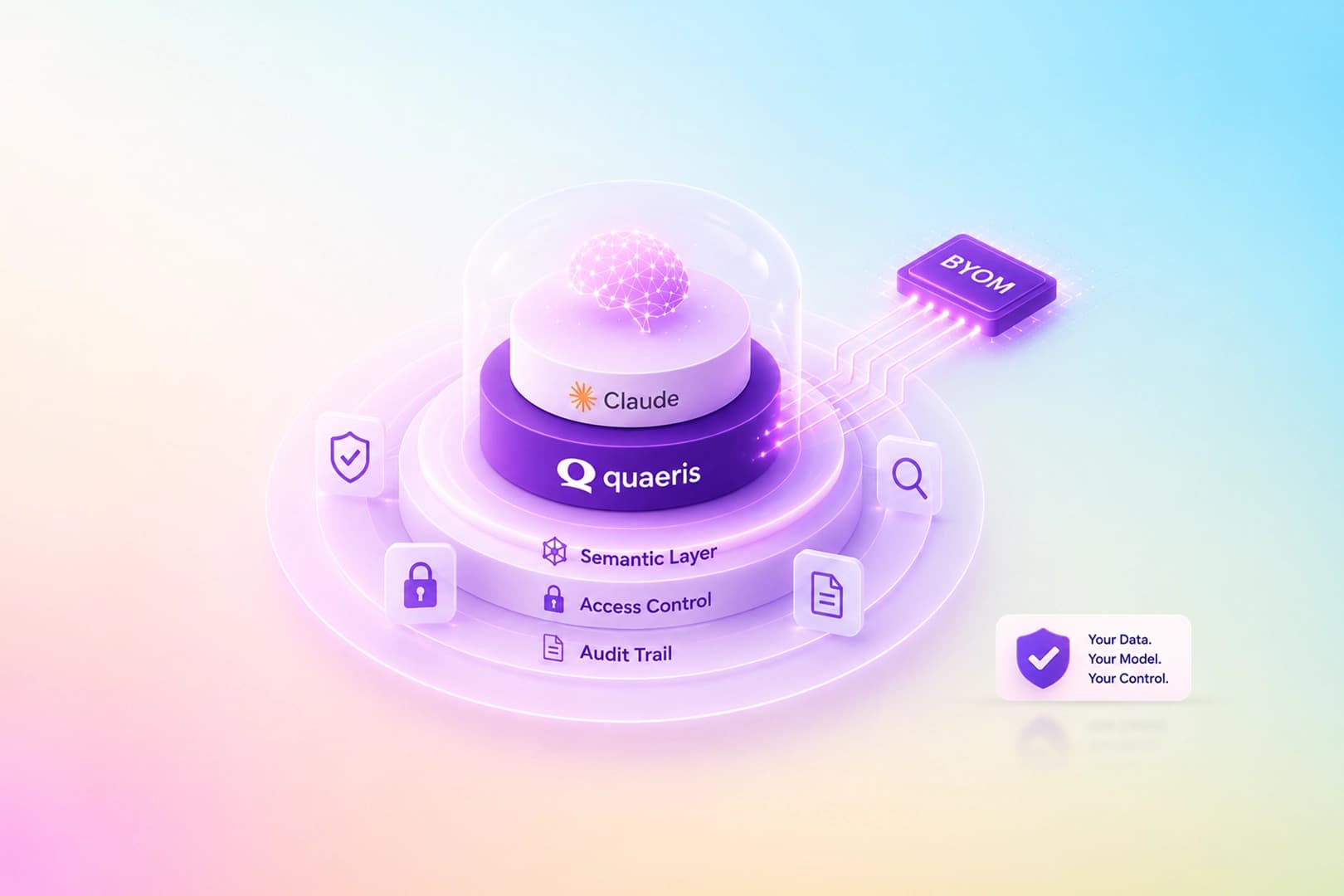
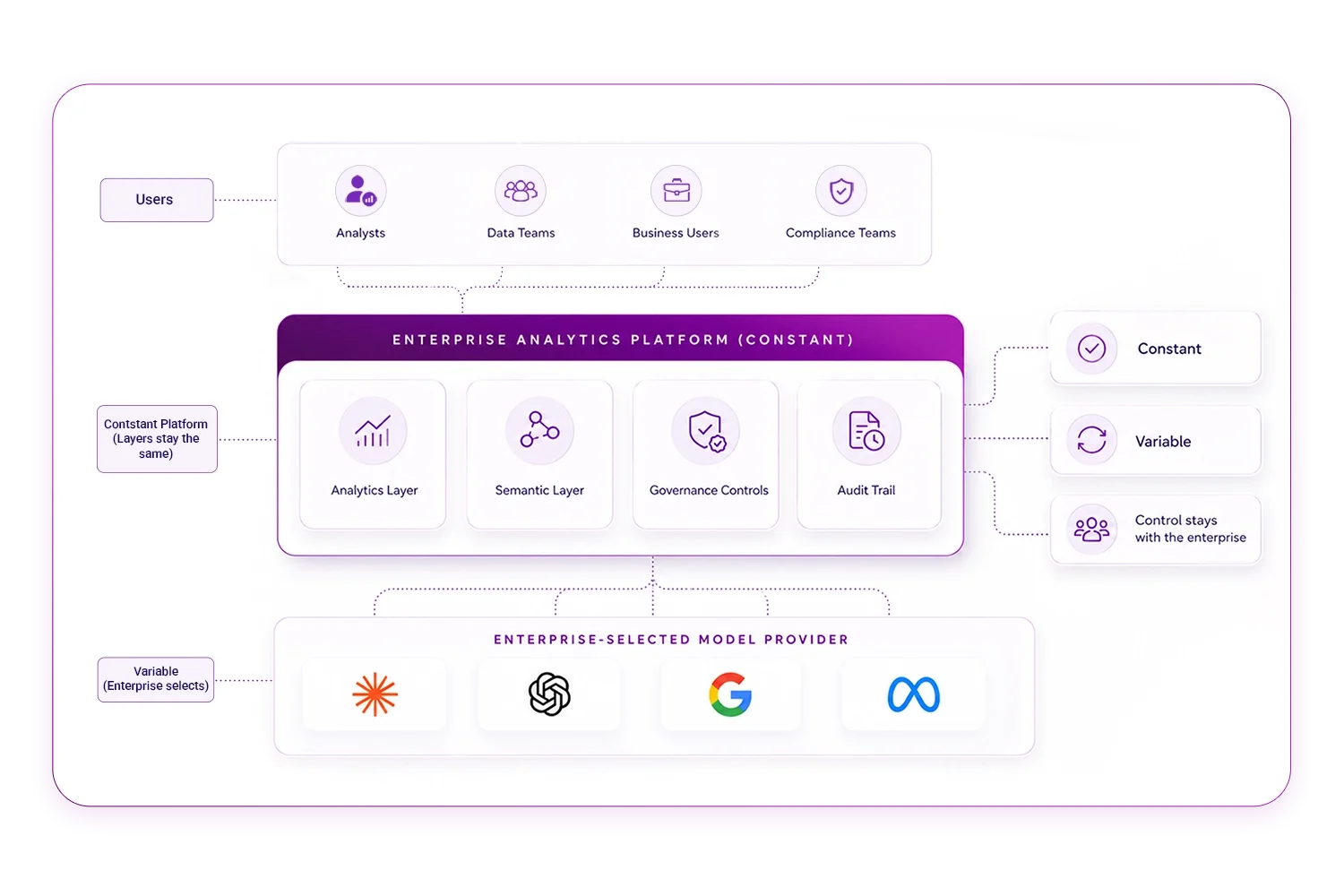
BYOM stands for bring your own model, and it names a simple architectural property with far-reaching consequences: the enterprise, not the analytics vendor, decides which large language model powers the platform. In a BYOM architecture, the analytics layer, the semantic layer, the governance controls, and the audit trail are constant, while the model underneath is a choice, selectable among providers such as Anthropic, OpenAI, Google, and Meta, and changeable as circumstances change. Most of the market is built the opposite way: the model is welded in, chosen by the vendor, and the customer inherits that choice along with everything downstream of it. The difference looks like a technical detail. It is actually a control question, which is why the people who end up caring most about it are not the data scientists. They are the compliance team.
What BYOM is, precisely
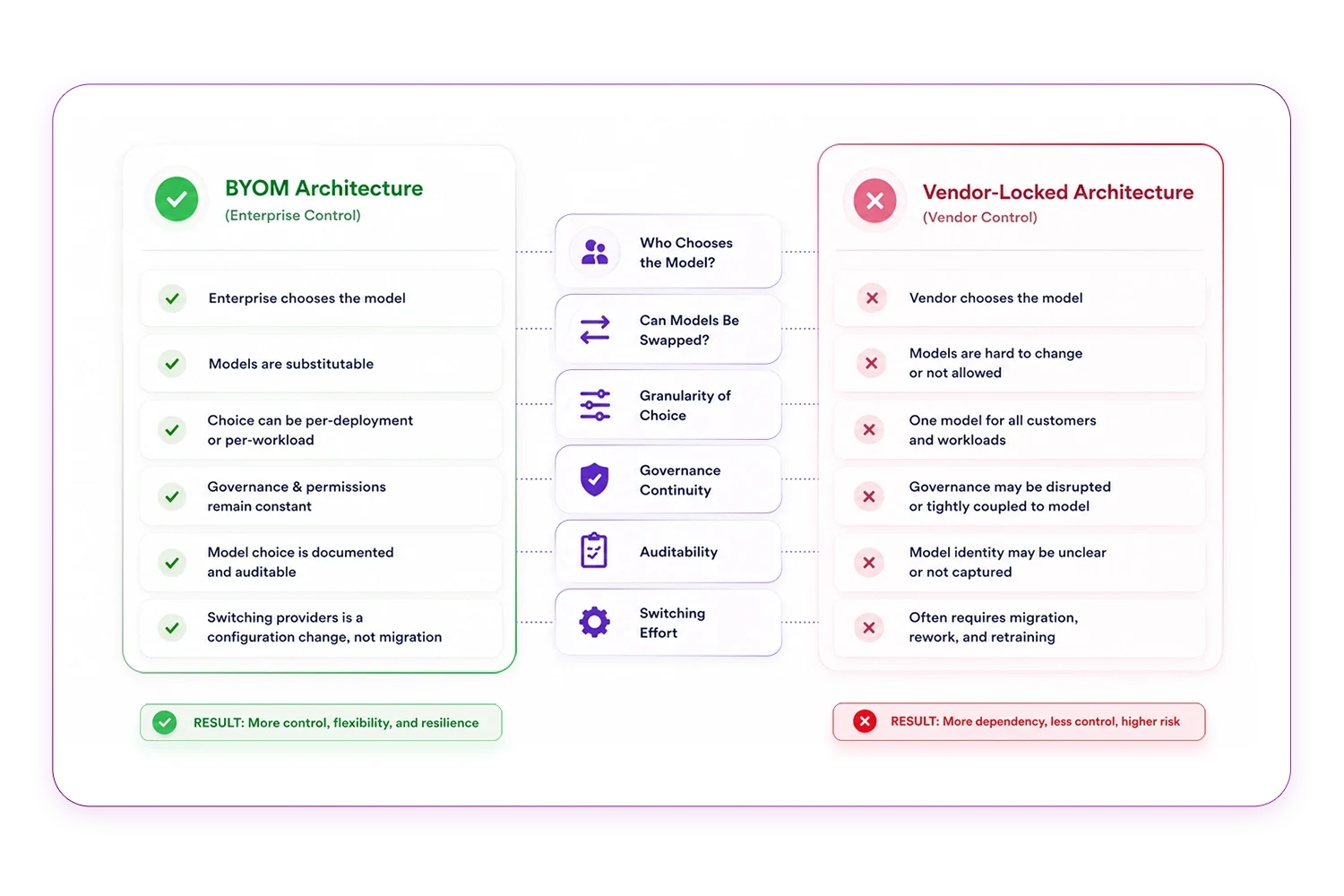
Three properties define genuine BYOM, and all three matter. First, the model is substitutable: the platform’s grounding, permissions, and logging do not depend on any one provider’s model, so replacing the model does not mean replacing the system or retraining the users. Second, the choice operates at the level the enterprise needs, which increasingly means per-deployment or even per-workload: one model for general analysis, a different one where a jurisdiction or a client contract requires it. Third, the selection is documented and auditable, because a choice that cannot be evidenced is not a control. Marketing language blurs this constantly, so it is worth naming what BYOM is not: a platform that lets the vendor swap models on their own schedule is not BYOM, and neither is one where switching requires a migration project. The defining question is who holds the decision and how cheaply it can be exercised.
Why compliance teams arrive at this demand
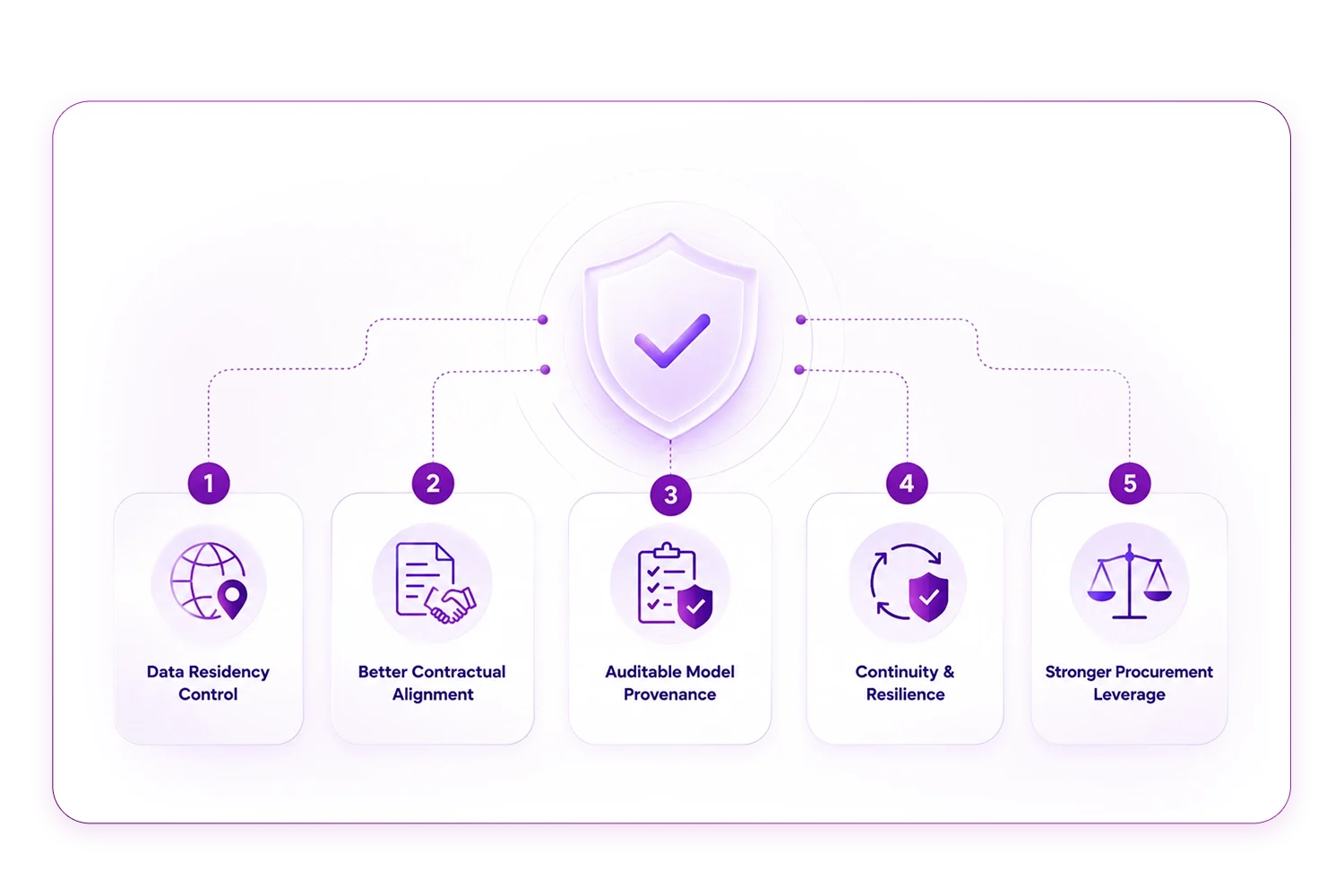
Compliance functions think in terms of dependencies they can control and dependencies they cannot, and a welded-in model is a large uncontrolled dependency sitting in the middle of a consequential system. Consider what the model choice actually determines. It determines where prompts containing business context are processed, which is a data-residency and confidentiality question. It determines whose terms govern that processing, which is a contractual question the enterprise negotiated with its analytics vendor but not with the model provider behind them. It determines model provenance, which regulatory frameworks for AI increasingly expect organisations to document: what system made this decision, built by whom, under what assessment. And it determines exposure to change, because model providers retire versions, alter behaviour, and update terms on their own schedules, and every such change flows straight into a locked platform whether the enterprise’s risk assessment approves it or not.
Against that backdrop, BYOM converts a cluster of uncontrollable dependencies into governed decisions. Residency requirements become model-selection criteria rather than vendor negotiations. A client contract or regulator that constrains which AI providers may touch certain data becomes a configuration, applied per tenant or per workload, rather than a dealbreaker. A model provider’s terms changing adversely becomes an exit executed in weeks rather than a re-platforming programme. Compliance teams demand BYOM for the same reason they demand data-residency options and exit clauses everywhere else: not because they expect to exercise the option constantly, but because the absence of the option is itself the risk.
The procurement and continuity dividends
The compliance case usually gets BYOM onto the requirements list, but two adjacent benefits keep it there. The first is negotiating position. An enterprise that can substitute models holds real bargaining power with every provider in the rotation; an enterprise that cannot switch has told its model vendor exactly how much pricing power it has surrendered, and vendors price accordingly. The second is continuity. Model performance is not static across providers: capabilities shift with each release cycle, and the best model for SQL generation this year is not guaranteed to be the best next year. A BYOM platform lets the enterprise follow that frontier, adopting improvements as configuration changes, while a locked platform’s customers watch the frontier move from a fixed seat. There is also a resilience angle that business-continuity planners appreciate: dependence on a single AI provider is a single point of failure, and BYOM makes failover between providers an operational pattern rather than a crisis.
What to verify before accepting a BYOM claim
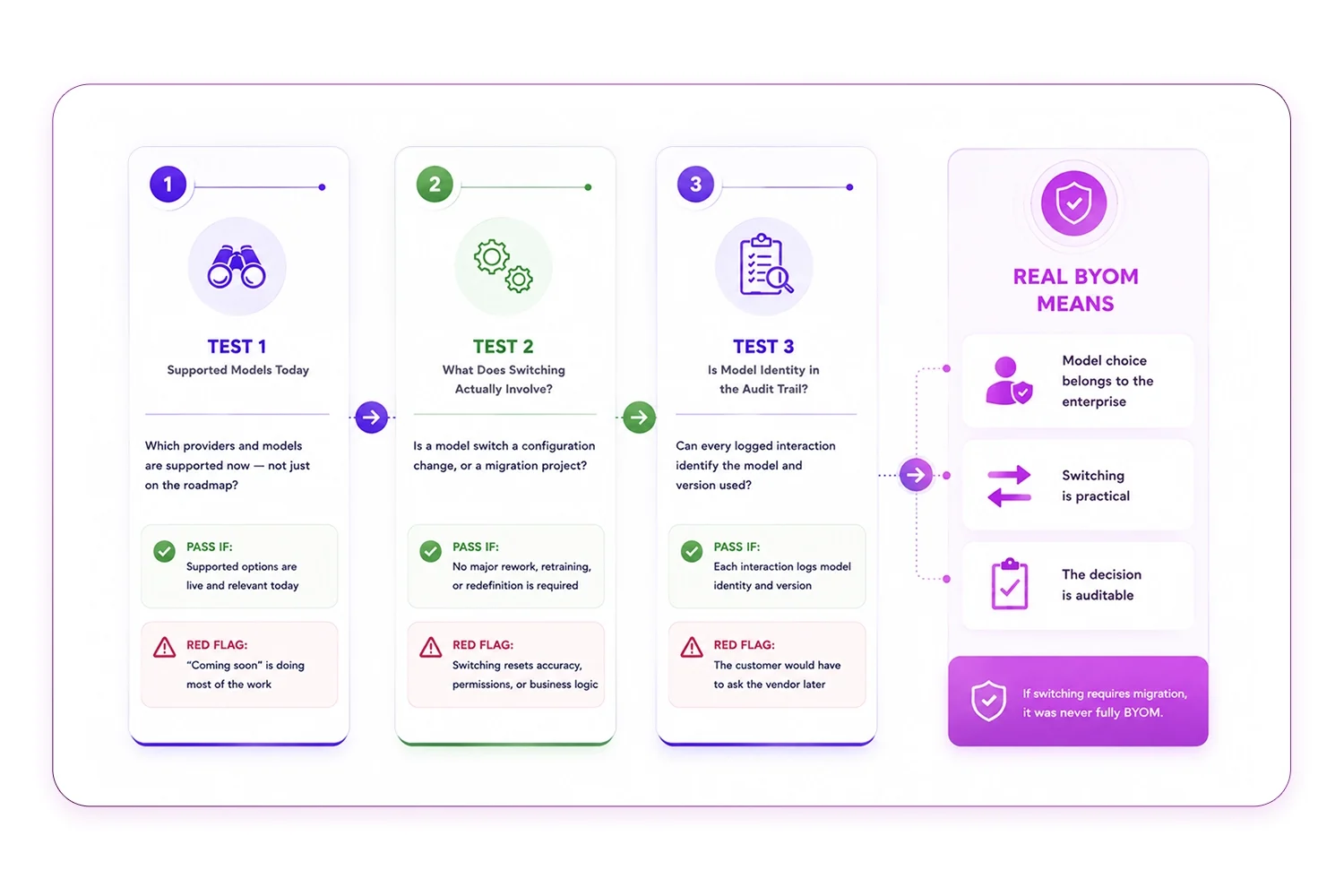
Because the term is fashionable, verification matters more than the label. Three tests separate real BYOM from a checkbox. Ask which specific providers and models are supported today, not on the roadmap, and whether the list includes at least one option satisfying your strictest jurisdiction or client requirement. Ask what a model switch actually involves: a genuine BYOM platform re-grounds the new model in the same semantic layer and governance controls, so accuracy and permissions carry over and analysts are not retrained; if the vendor describes migration effort, definitional work redone, or an accuracy reset, the model was more welded-in than advertised. And ask how the audit trail records model identity: every logged interaction should name the model and version that produced it, because when a regulator or auditor asks which AI generated a given analysis, “we would have to check with the vendor” is not an answer. QuaerisAI’s architecture treats all three as native properties, with model choice spanning Anthropic, OpenAI, Google, and Meta, grounding and governance held constant across that choice, and model identity captured in the prompt-level audit trail on every query, based on QuaerisAI published materials.
The direction of travel
Model choice is following the path that data-residency options and SOC 2 reports followed before it: from differentiator, to requirement in regulated industries, to table stakes everywhere. The mechanism is procurement. Once compliance teams in banking, insurance, and healthcare put model substitutability into their RFP templates, and they are doing so now, vendors without it stop clearing the bar, and the requirement propagates outward from the regulated core to the whole market. Enterprises selecting analytics platforms today can either anticipate that requirement or retrofit for it, and retrofitting an architecture is the expensive version of the same decision.
Frequently asked questions
Does BYOM mean hosting and operating the models ourselves?
No. BYOM concerns who holds the choice of model, not who runs the infrastructure. In a platform like QuaerisAI, the enterprise selects the provider and model, and the platform manages the integration. Self-hosted and private-deployment models can be part of the eligible set where requirements demand it, but they are one option within BYOM, not its definition.
Does switching models degrade accuracy?
Far less in a governed architecture than the fear suggests, because most enterprise-specific accuracy lives in the semantic layer rather than in the model. Certified definitions, blessed tables, and learned corrections carry over unchanged when the model is swapped; what varies is the general capability of the model executing them. The disciplined practice is to rerun your gold-standard evaluation set after any model change, which a platform with a full audit trail makes straightforward.
Is BYOM relevant for organisations outside regulated industries?
Yes, though the leading motive shifts from compliance to economics and continuity: bargaining power across providers, freedom to follow model improvements, and no single-provider point of failure. The compliance motive also has a way of arriving later, through client contracts and expanding AI regulation, and organisations with BYOM in place absorb those arrivals as configuration rather than as projects.