
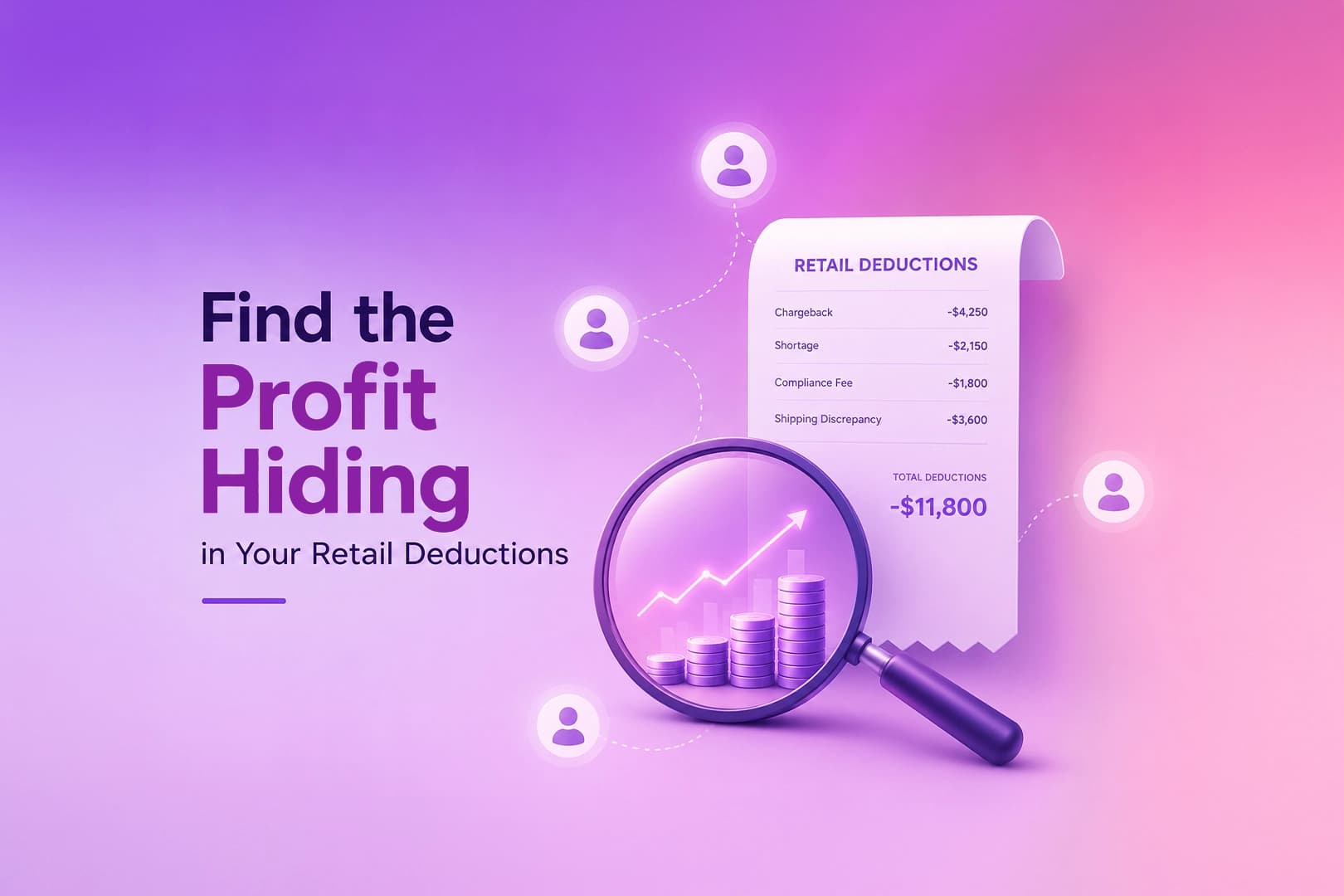
Retail deductions and chargebacks are one of the most persistent sources of profit leakage for CPG manufacturers, and one of the least visible. When a retailer issues a deduction, whether for a compliance issue, a shortage, or a shipping discrepancy, they simply reduce the payment on the invoice. The supplier receives less money and is left to determine why.
For most organisations, this creates a compounding problem. Deductions accumulate across multiple retailer relationships simultaneously. The process required to reconcile and dispute them is manual, documentation-dependent, and spread across teams that were not designed to work together. Accounts Receivable teams spend significant time searching for evidence and coordinating across logistics, warehouse, and finance just to determine whether a single deduction is valid. By the time that determination is made, the dispute window has often closed.
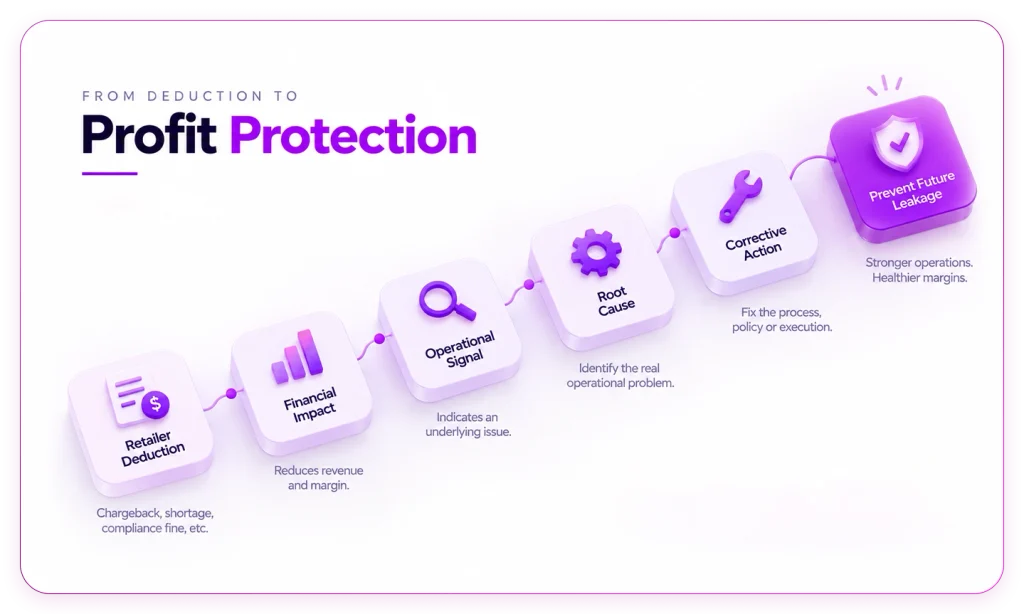
From Reactive Reconciliation to Proactive Profit Protection
The traditional approach to deduction management treats it as an accounting problem. Finance teams reconcile what happened, dispute what they can prove, and write off the rest. This cycle repeats every period without addressing the operational conditions that created the deductions in the first place.
QuaerisAI helps finance teams break out of this cycle by connecting deduction data to the operational supply chain signals that sit behind it. Instead of reconciling in isolation, teams can surface the underlying causes of revenue leakage and quantify the financial impact of each failure point.
This gives leadership the visibility to make decisions that actually reduce margin erosion rather than just documenting it:
- Identifying systemic failure points across the supply chain before they repeat
- Measuring the return on operational improvements and capital investments at a line-item level
- Prioritising initiatives based on their direct impact on margin, not just their operational significance
The Documentation Problem Inside Dispute Resolution
A major barrier to successful dispute resolution is documentation availability. Evidence such as Bills of Lading, shipping confirmations, and transportation records is typically stored across siloed systems spanning AR, logistics, and warehouse teams. In many cases it exists only as PDFs or spreadsheets that are difficult to locate within the narrow window a dispute requires.
QuaerisAI’s document intelligence capabilities allow teams to locate and validate critical shipment documentation quickly, including verifying signatures and delivery confirmations. A signed Bill of Lading, for example, is often the single piece of evidence required to challenge a shipping-related deduction. When that document lives buried in a logistics system that finance cannot easily access, the dispute is lost before it begins.
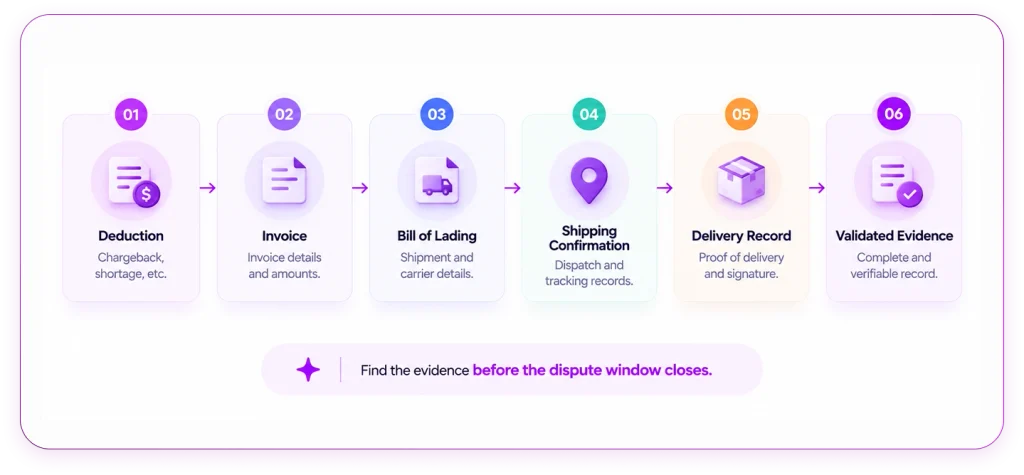
By connecting structured financial data with unstructured document repositories in a single governed query environment, QuaerisAI removes the cross-departmental coordination that currently makes dispute resolution so labour-intensive.
Understanding True SKU-Level Profitability
Deduction management has a deeper layer that most CPG organisations never reach. Most track item performance based on revenue and trade spend. Few incorporate the full impact of deductions, compliance fines, post-audit recoveries, returns, and operational penalties into a complete picture of what a product actually earns.
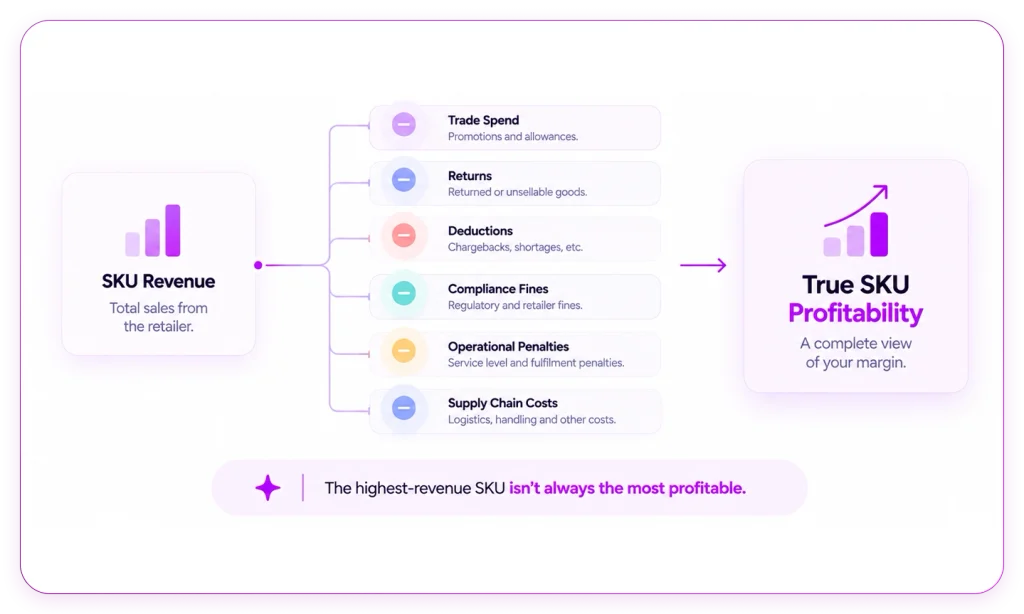
By unifying financial and operational data, QuaerisAI allows organisations to understand true SKU-level profitability after supply chain costs and deductions are applied. This changes the nature of the questions leadership can ask. Instead of asking which products have the highest revenue, they can ask which products have the highest margin after every downstream cost is accounted for, and which retailer relationships are eroding that margin through deduction patterns that repeat quarter after quarter.
What Changes When You Treat Deductions as an Operational Signal
Organisations that treat deductions purely as an accounting issue will always remain in a cycle of reconciliation and write-offs. The deductions keep appearing because the operational conditions that create them are never addressed.
Connecting financial outcomes to the operational events that created them changes what becomes visible. A pattern of deductions from a specific distribution centre points to a fulfilment process problem, not just a payment discrepancy. A cluster of compliance fines from a single retailer points to a labelling or scheduling gap that can be corrected at the source. The dispute is the symptom. The data is the diagnosis.
The result of this shift is improved financial visibility, stronger working capital management, and the ability to reduce profit leakage systematically rather than case by case. Deduction management stops being a reactive task and becomes a source of operational intelligence, one that informs decisions about where to invest, which retailer relationships to renegotiate, and which supply chain processes to fix before the next period’s deductions arrive.